
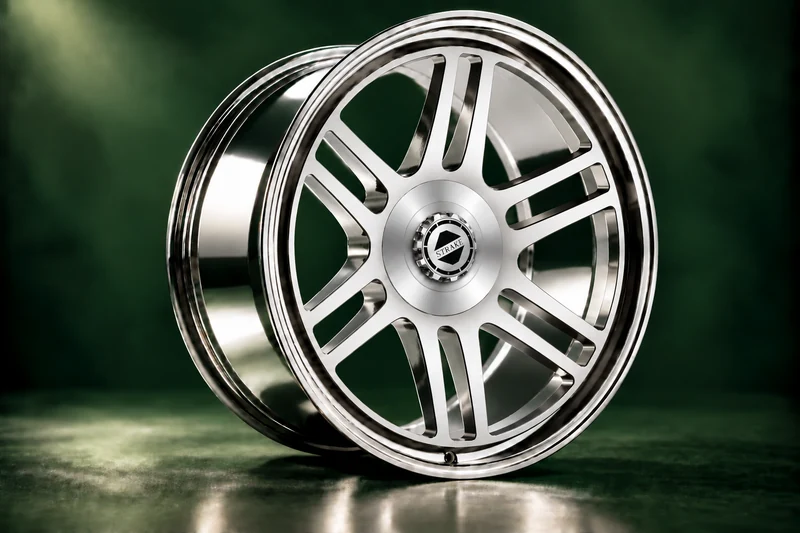
Colour, texture and reflection.
A finish name only tells part of the story. Two silver wheels can look very different because one has a bright, sharp reflection and the other has a softer sheen. When you save a reference, work out which part you actually like. Is it the pale tone against a dark tyre? The way a spoke edge catches the sun? The darker pockets between the spokes? Separating colour from reflection makes the choice more precise. It also helps when a favourite photograph is lit in a way your own car rarely will be.
Read the trim before matching the paint.
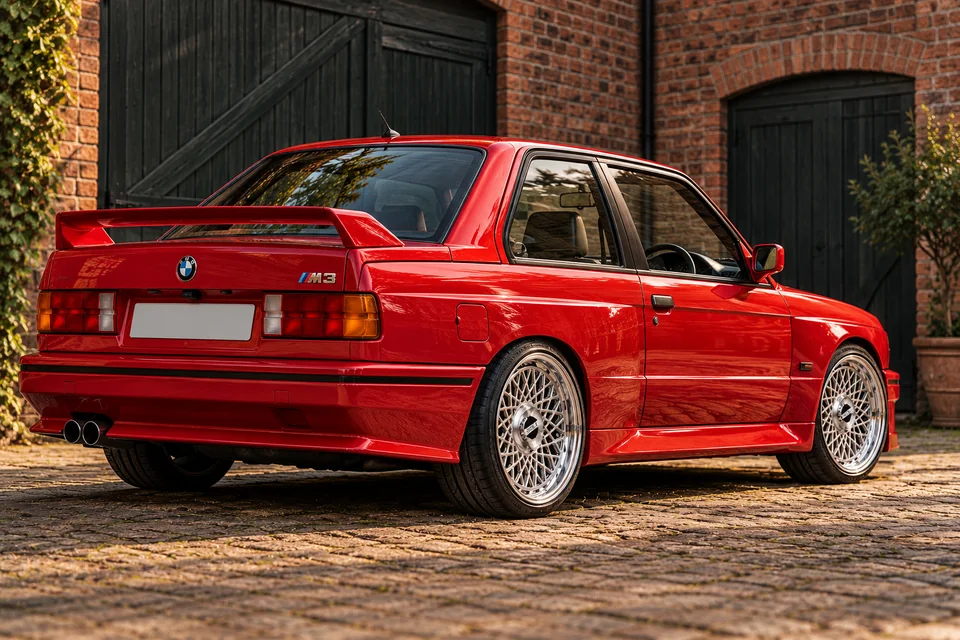
Window surrounds, grilles, exhaust tips and badges give a car a second colour palette. A bright wheel can pick up those details without matching every one of them. A darker wheel can work with black trim, but it may also hide the spoke shape in shadow. Look at the entire car in daylight and decide where you want the contrast. On a dark body, a pale wheel can make the shape and stance immediately legible. On a pale body, the same finish may read more quietly. Neither is a rule; it is a reason to make the comparison on the actual colour of your car.

Let the shape do some of the work.
A broad spoke gives a reflective finish a large surface to move across. A fine multi-spoke breaks the reflection into many small lines. Recesses and raised edges can become much more obvious in bright metal, while a flatter treatment can make the overall pattern the main feature. This is why a favourite finish does not automatically suit every wheel. Look at the centre, the transition into the spokes and the outer rim separately. Then step back and check that they still work as one face.
Compare light that you actually drive in.
Studio lights give a wheel long, controlled highlights. A cloudy morning gives it something much softer. Deep shade may make a darker finish lose most of its detail. Use photographs to narrow the choice, then compare a representative finish sample in daylight and shade wherever possible. Move it beside the bodywork rather than judging it on a desk. A screen is useful for choosing the broad effect; the sample is where tone, texture and the actual surface can be assessed properly.
Choose a finish you want to live with.
A weekend show car and a car that spends winter on the motorway ask different things of their owner. Include that in the finish conversation. Ask for the care instructions for the exact surface, including suitable cleaners, washing methods and any seasonal restrictions. Check the terms for damage and repair as well. Access between the spokes matters too: a densely detailed face may take more patience to clean than an open five-spoke. Choose the wheel you enjoy looking after, as well as looking at.
Be specific about the finish you choose.
Keep the finish reference beside the selected design and vehicle details. A description such as ‘bright silver’ is useful at first, but a final specification should identify the actual treatment and the reference used to agree it. If the face, pockets, lip or centre use different treatments, record each part. This avoids making a decision about one small photograph and expecting a whole wheel to look the same in every light. The aim is a finish that belongs on the car, from every angle.
Things to check on your car.
Keep your choices in one place.
Save yourself a list of the car, the wheel and the setup you have in mind.
Plan your wheels