
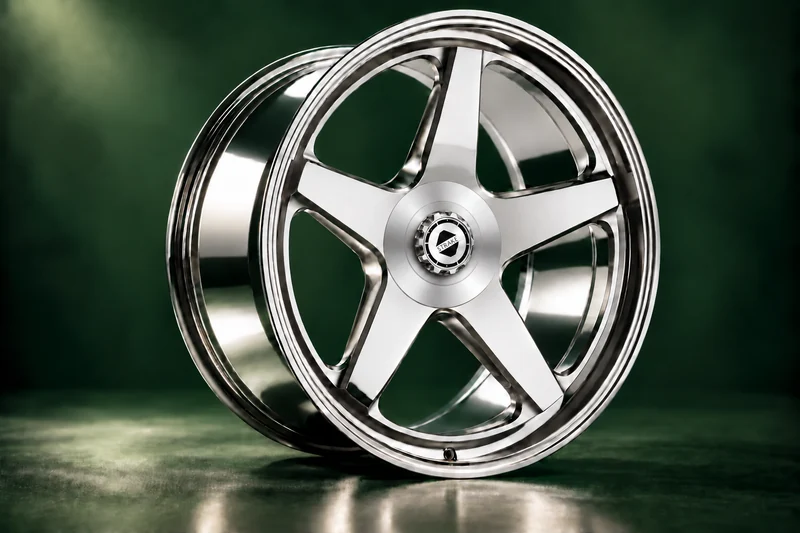
Look at the whole side of the car.
A wheel fills a small part of a photograph and changes almost all of it. The eye follows the lower edge of the body, the tyre, the arch and the shoulder line as one shape. A clean side view makes those relationships easy to see. Look at the length of the bonnet, the height of the doors and the amount of body above the arch. A long coupé can carry a detailed wheel differently from a short hatchback, even when both have similarly sized arches. Before comparing wheel sizes, decide what feels out of balance in the car as it sits now. More diameter is only one possible answer.
The face changes the apparent size.
Long spokes that run close to the outer edge tend to make a wheel read differently from a face framed by a broad lip. A small centre, a distinct step and the amount of open space around the brakes all change the visual weight. Compare a broad five-spoke with a close multi-spoke at the same scale and the difference is obvious. Neither needs a larger diameter to have more presence. Use this when choosing between designs: if you like the size of the existing wheel but want it to look stronger, another face may do more for the car than moving to the next rim size.
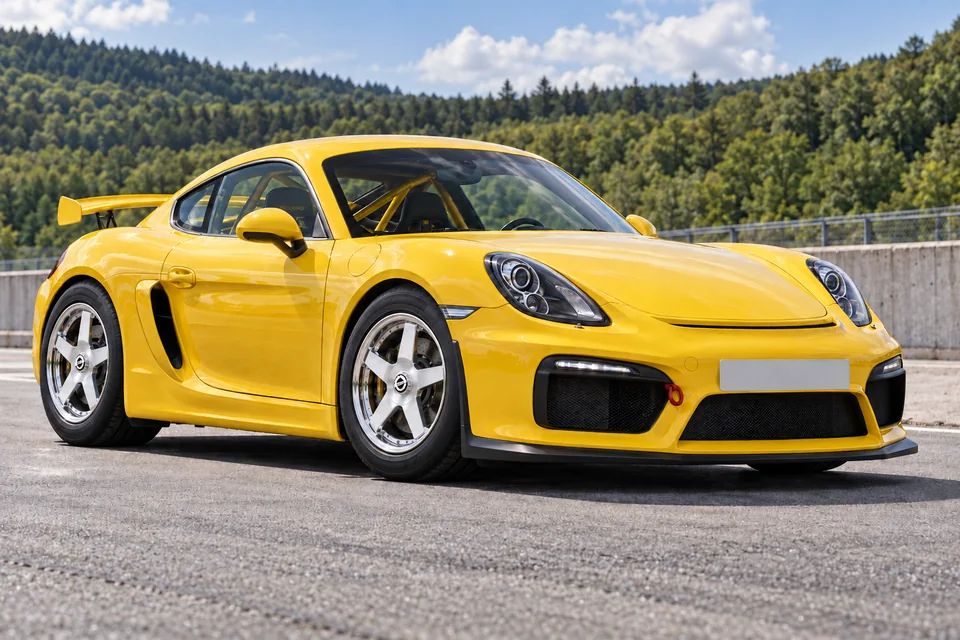
Keep the tyre in the picture.
The tyre is part of the finished shape. A visible sidewall can give a car a purposeful, substantial stance; a lower-profile appearance can put more emphasis on the rim. Neither look tells you which tyre is suitable. The wheel and tyre have to be selected together, with the correct dimensions and ratings for the vehicle. When discussing a change, bring the current tyre size as well as the wheel size. The tyre manufacturer’s guidance and a professional assessment matter more than a visual comparison on a screen.
Ride height changes the comparison.
A parked car on air suspension and the same car at driving height can look like two different setups. So can a road car and a track car with a substantial tyre shoulder. When saving references, note the suspension and the height shown in the photograph. Compare driving-height images with driving-height images, rather than treating a fully lowered show position as an everyday fitment. If the car has modified suspension, include the details early. They are part of the wheel discussion, rather than something to work around after a design has been chosen.
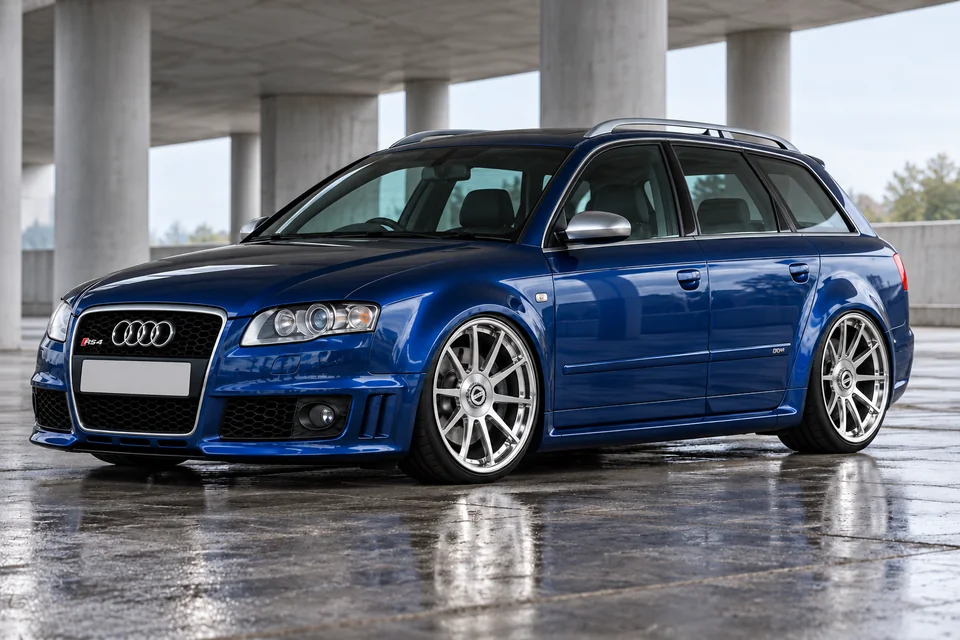
Use an honest reference photograph.
A low camera angle, a wide lens and a wheel turned towards the camera can make almost any setup look more aggressive. They are useful for a dramatic photograph and less useful for comparing proportions. Keep a plain side view and a front three-quarter view alongside the images you love. Look at the wheel that is further from the camera too. If the combination still works in an ordinary photograph, you have a much better reason to choose it than a single perfect angle.
Leave the final size to the full specification.
Once the shape is right, work through the practical package: the car, its brakes and suspension, the wheel dimensions and the proposed tyres. A diameter alone cannot confirm brake clearance. The barrel and inner spoke profile also need checking against the brake hardware, particularly when an upgrade is fitted. Record the visual result you want, then have the complete specification checked for the exact application. The best choice is one that looks right as a whole and works as a whole.
Things to check on your car.
Keep your choices in one place.
Save yourself a list of the car, the wheel and the setup you have in mind.
Plan your wheels